Customizing outdoor umbrellas in China involves more than simply choosing a color and adding a logo. The umbrella size, frame structure, fabric, intended use, packaging and order quantity can all affect the final specifications and price.
If you are looking for an outdoor umbrella manufacturer, preparing some basic information in advance can make product development and quotation much more efficient.
1. Define the Umbrella Type and Application
Start by identifying the type of outdoor umbrella you need, such as:
Market Umbrella
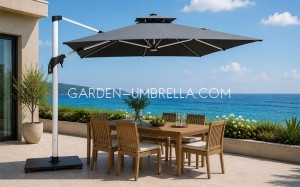
Cantilever Umbrella
Beach Umbrella
Commercial Umbrella
Custom or Special-Structure Umbrella
It is also helpful to tell the manufacturer where the umbrellas will be used, such as hotels, restaurants, beaches, patios, retail markets or commercial projects.
Different applications may require different levels of structural strength, fabric performance, product weight and cost.
If you already have a product in mind, providing a reference photo, product link, drawing or physical sample is often the most efficient way to start.
2. Confirm the Main Specifications
A typical outdoor umbrella quotation may require the following information:
Pole Diameter
For example: Ø28mm, Ø38mm, Ø48mm, etc.
Umbrella Size
For example: Ø2.0m, Ø3.0m, 3 × 3m, 3 × 4m or 4 × 4m.
Frame Material
Common options include aluminum, steel and wood. Metal frames can be finished with powder coating, anodizing or heat-transfer wood-grain finishes.
Rib Material
Depending on the umbrella structure, ribs can be made of aluminum, steel, fiberglass or wood.
Opening System
Common options include push-up, pulley and crank systems.
For cantilever umbrellas, additional functions such as rotation and tilt may also need to be considered.
If some specifications have not yet been decided, you can provide the manufacturer with your target market, intended application and budget, and ask them to recommend a suitable solution.
3. Choose the Right Fabric
Common outdoor umbrella fabrics include polyester, olefin and acrylic.
In addition to the fabric type, consider:
Fabric weight
UV / UPF protection
Water repellency
Color fastness
Printing requirements
For example:
210gsm Polyester + UV50+ + Water Repellent
This provides the manufacturer with much clearer information than simply requesting a “waterproof fabric.”
For initial or trial orders, choosing the manufacturer's existing fabrics and stock colors can often reduce both MOQ and cost. Custom Pantone colors may require special dyeing and a higher minimum order quantity.
4. Customize the Logo, Color and Packaging
Common logo printing methods include screen printing, heat transfer printing and digital printing. The best option depends on the artwork, number of colors, printing area, fabric and order quantity.
In addition to the canopy, many other details can be customized according to your project requirements:
Frame color
Finial and hardware
Umbrella base
Carry bag or protective cover
Product labels
Hangtags
Instruction manuals
Export cartons
Private-label packaging
A complete OEM project therefore often involves not only the umbrella itself, but also the accessories and packaging.
5. Can an Umbrella Be Developed from a Photo or Drawing?
Yes.
Custom umbrella projects generally fall into two categories.
Modification of an Existing Model
This may include changing the size, color, fabric, logo or packaging. Since the main structure already exists, development is usually faster, with a lower MOQ and lower development cost.
Development of a New Structure
If you have a reference sample, product photo, 2D/3D drawing or product concept, the manufacturer can evaluate the feasibility of developing a new structure.
If new aluminum profiles, plastic components or special connecting parts are required, new tooling may be necessary. Tooling costs, MOQ and estimated development time should be confirmed before the project begins.
6. MOQ and Samples
There is no single standard MOQ for custom outdoor umbrellas.
MOQ usually depends on:
Product Structure + Fabric + Color + Printing + Packaging + Tooling Requirements
When existing structures and stock materials can be used, the MOQ is usually more flexible. Custom-dyed fabrics, special aluminum profiles or newly tooled components generally require higher quantities.
Before mass production, it is recommended to make a sample to confirm the structure, materials, color, logo and packaging.
For more complex OEM/ODM projects, the final approved sample can also serve as the reference standard for mass production.
7. What Should You Prepare Before Requesting a Quotation?
To receive a suitable product proposal and a more accurate quotation, it is helpful to provide:
Umbrella Type + Size + Materials + Fabric + Color + Logo + Quantity + Packaging Requirements + Target Market
You do not need to finalize every specification before contacting a manufacturer.
Even if you only have a reference photo, you can start with that and then work with the manufacturer to determine the appropriate structure and specifications based on your target market and budget.
For a custom outdoor umbrella project, an experienced supplier should do more than simply provide a price. The real value is in helping turn an initial product idea into a practical solution that can be sampled, manufactured and reliably produced in volume.